Showing posts with label British LIterature. Show all posts

Tuesday, August 24, 2021

Blog Post: Murder in Ratcliffe by Emily Organ


Goodreads Summary: A Victorian wife has obligations to her husband and home. But Penny Blakely is no ordinary Victorian wife.
When a house in Penny’s neighborhood is gutted by fire, she learns of a connection to an unsolved murder. Penny will always be a news reporter at heart, and the mystery is impossible to ignore.

How did a young, middle-class lady fall from grace? And who killed her? Penny’s search for the truth takes her to London’s East End and a notorious street once known as the Ratcliffe Highway.

Her investigations stir long-buried secrets, and she soon makes some unpleasant enemies. But will her new husband approve of her exploits and lend his support?

Goodreads Ratings: 4.36 stars with just over 500 ratings

Genre Listing: Historical Fiction, Mystery, Victorian, British Literature

Previous Reviews on the Series: Limelight, The Rookery, The Maid's Secret, The Inventor, The Curse of the Poppy, The Bermondsey Poisoner, An Unwelcome Guest, Death at a Workhouse, The Gang of St. Bride's

Goodreads Challenge: 31/50

2021 Reading Challenge: #14 Read a Murder Mystery (Find the entire challenge here)


Book Review:

Hello, readers! Now that I finished The Shadow Rising by Robert Jordan, we return to our regularly scheduled one to two books a week. Although, that may change here for the next few weeks because big things are happening! My husband and I bought a townhouse, and we're getting ready to close and move in. I am so excited and can not wait to get away from noisy upstairs neighbors and having to share a laundry room. I fully plan to set up a library even though I mostly just gravitate to Kindle.

Anyways, after I finished the tome that is a Wheel of Time book, I decided I needed something light and quick that I knew I'd enjoy. Queue a Penny Green mystery by Emily Organ. I love this series so much if you can't tell by the number of books in the series I've read. I try to read them when they first come out, but this one escaped my notice. For those of you unfamiliar with the series, it follows Penny Green in Victorian London. Penny's a female journalist who has a knack for getting herself into trouble as she investigates stories. I wouldn't quite call this a cozy mystery. It's reasonably clean, but the explanations of the deaths can get a little descriptive. The books are all around 300-350 pages and go pretty quickly. They're action-packed and get to the point. I absolutely adore this series. It's one of my favorite that I've found on Kindle Unlimited. If you read it, I highly recommend reading it in order (my list above is in order.)

Murder in Ratcliffe was no exception to the above. I wasn't sure how I would like it with Penny and James being married now, but it still kept up with the same pace of them solving some of the crimes together. It was interesting to somewhat see them fall into the comfort of married life and adjusting. I'm curious to see how Penny's life evolves now that she's not working for the Morning Express. I have a couple of theories on where she'll use her crime-solving experiences, but I'll have to wait and see how they play out. I don't think she'll sit quietly at home while James works as an inspector. 

One of the sub-plots in the previous books got some finality in this book. Previously the books paid a lot of attention to the mystery behind Penny's father and what happened to him when he was exploring South America. With Mr. Green's disappearance solved, this aspect of the story felt a little flat. I'm hoping there's a little more that hasn't been divulged yet, as the current ending of the story was a little unsatisfactory.

As far as the mystery goes, I always appreciate that Emily Organ provides a handful of potential suspects in each book. They all have the merit to be the culprit, and it's always fun to see how the evidence unfolds. I'm always entertained by trying to figure out if I'm right on who was guilty. I was not this time. I just glanced through my reviews on the series. I never know who the murder is. I would have thought after ten books I might get one right, but I guess not. 

Anyway, if you like the murder mystery genre and/or historical fiction, this may be a good choice for you. It's easy to get into. There are many books in the series, with a new one dropping around Halloween this year. It's an excellent series to binge without having to dedicate a considerable time commitment to it. 


Wednesday, May 19, 2021

Book Review: Dear Mrs. Bird by A.J. Pearce


Goodreads Summary: London, 1941. Amid the falling bombs, Emmeline Lake dreams of becoming a fearless Lady War Correspondent. Unfortunately, Emmy instead finds herself employed as a typist for the formidable Henrietta Bird, the renowned agony aunt at Woman’s Friend magazine. Mrs. Bird refuses to read, let alone answer, letters containing any form of Unpleasantness, and definitely not those from the lovelorn, grief-stricken or morally conflicted.

But the thought of these desperate women waiting for an answer at this most desperate of times becomes impossible for Emmy to ignore. She decides she simply must help and secretly starts to write back – after all, what harm could that possibly do?

Goodreads Ratings: 3.78 stars with over 36,000 ratings

Genre Listing: Historical Fiction, World War II, British Literature, Book Club

Goodreads Challenge: 16/50   (Hey! I'm catching up!)

2021 Reading Challenge: #5 Read a Book that starts with the letter D (find the entire challenge here)

Book Review:

Yay! I'm getting caught up on my reading. I suspect this will not last long as I've got a handful of large books I want to read and will likely just get behind again. I'm trying to knock out a few easy categories with short books to give myself a buffer.

I picked up Dear Mrs. Bird while it was on sale. I actually didn't have high expectations for it but was pleasantly surprised. The story follows Emmy during WWII as she starts a new job for what she thinks is to be a Lady War Correspondent. Due to the lack of details in the ad and a lack of asking questions on Emmy's part, she finds herself a typist for a women's advice columnist.

Mrs. Bird is a strict, no-nonsense type of woman who feels that the etiquette of 1918 is what readers still want. Therefore, she has a list of topics she deems as unpleasant and refuses to respond to. Emmy feels sorry for the readers and decides to respond to them in secret.

Even though it wasn't a mystery, this read very much like a cozy mystery genre to me. Aside from the darker topics of war, the rest of the story read in that cutesy fashion I've grown accustomed to in cozy mysteries. With the darker issues surrounding WWII going on, I thought that was interesting. I have no idea how accurate the details were. If they were well researched, that'd be such a terrifying time to live through. I'm ashamed to admit that my WWII knowledge is sketchy at best as much as I like reading about history. I mostly fell asleep during history class in school, and it's not one I've read up much about on my own. I typically gravitate towards Revolutionary times and earlier. 

I thought that Emmy was likable enough. I felt it read like a cozy mystery because her default setting was to try and get involved with things way above her head and solve all of the problems. She had the best of intentions, but they don't always go the way she plans. I think the way her secret about writing the letters came out was interesting, and I kind of expected something along those lines (trying to not give too many spoilers.) 

I love that she has a relationship form through writing letters. That just seems quintessential of the era. Charles seemed like a way better upgrade than her ex. Everything with Charles was left so open-ended that he felt a little forgotten towards the end of the book. I'm hoping that the second book picks that up. We also got to get a glimpse of her best friend Bunty in Dear Mrs. Bird. Bunty went through a lot, possibly more than Emmy did. I felt so incredibly sorry for Bunty. 

Overall, I really liked the book. It was a little cheesy at times, but it was still enjoyable. I'm looking forward to the second book, which is available for Pre-Order now. I have it on my wishlist to wait and see if the price drops once it's available. 


Thursday, December 24, 2020

Book Review: Pride and Prejudice by Jane Austen


Goodreads Summary: In this historic romance, young Elizabeth Bennet strives for love, independence, and honesty in the vapid high society of 19th century England.

Goodreads Rating: 4.26 stars with over 3 million ratings

Genre listing: Classics, Romance, Fiction, Literature, British Literature

Goodreads Challenge: 46/60

2020 Reading Challenge: #7 a book from Project Gutenberg (Find the full challenge here) Get ready for 2021's challenge (here)


Book Review:

Merry Christmas Eve, readers! I am off work for the next four days, and I am super excited. I plan to read at least one more book and do a final for one of my classes. Just an FYI about the 2021 challenge. There was an issue with the PDF printable version that I published. I'm not sure what's going on with it, but I took my link for the pdf down and replaced it with Tress's. Sorry for any inconvenience. You can find her post about the challenge (here). 

I had been attempting to read something for the Project Gutenberg slot for a while, but I honestly couldn't bring myself to read a classic. I thought that maybe if I went with one I was already familiar with from movies, it might go better. I adore the Pride and Prejudice movie with Keira Knightly, so I thought this would be a good option. (Side note, if I refer to 'the movie' in this post, it will be this version of it.)

Being familiar with the story helped, but some parts were overly dry and formal, making it hard to read. This is typically what makes it so I can't get into classics. Once the story progressed, it was a lot easier to get into, but it was a rough beginning for me. I'm not really going to dwell too much on Elizabeth and Mr. Darcy. That was all as expected for me, and I enjoyed it. 

I was delighted to get a more in-depth look at the character's personalities than what I had previously known. The scenes pretty much read like I'd expect them to, though maybe not in the order I was expecting them. Obviously, there were some scenes in the movie that weren't in the book. I was really pleased to see that one of my favorite lines in the film was directly from the book. 

"If any young men come for Mary or Kitty, send them in, for I am quite at leisure." -around 97% of the book.

I don't know why, but this line just amuses me. 

One thing I was really surprised at how much more ridiculous Lydia was in the book. In the movie, it was incredibly underplayed and glazed over how much of a scandal it was. There's a good chunk of the story dedicated to all of the things that had to be done to find her and Wickham and cover up their running away. I feel like, in the end, they kind of got Karma for just being awful. Somehow, Mrs. Bennet was even more vapid and ridiculous in the book. I pretty much just had to roll my eyes during her scenes. I don't really feel like she cared about whether or not her daughters were happy in their marriages (which, I get is part of the times) but just cared about how their marriages made her look. 

It took me a little bit to get into the story because of the formal wording, but I really liked the story. Because of my love of a movie version of it, it felt familiar. Truthfully, I'm mostly just in this for the sly snark like this:

"I must trouble you once more for congratulations. Elizabeth will soon be the wife of Mr. Darcy. Console Lady Catherine as well as you can. But, if I were you, I would stand by the nephew. He has more to give."


Sunday, November 29, 2020

Book Review: Mary Queen of Scotland by Margaret George


Goodreads Summary: She became Queen of Scots when she was only six days old. Life among the warring factions in Scotland was dangerous for the infant Queen, however, and at age five, Mary was sent to France to be raised alongside her betrothed, the Dauphin Francois. Surrounded by all the sensual comforts of the French court, Mary's youth was peaceful, charmed, and when she became Queen of France at the age of sixteen, she seemed to have all she could wish for. But by her eighteenth birthday, Mary was a widow who had lost one throne and had been named by the Pope for another. And her extraordinary adventure had only begun. Defying her powerful cousin Elizabeth I, Mary set sail in 1561 to take her place as the Catholic Queen of a newly Protestant Scotland. A virtual stranger in her volatile native land, Mary would be hailed as a saint, denounced as a whore, and ultimately accused of murdering her second husband, Lord Darnley, in order to marry her lover, the Earl of Bothwell. She was but twenty-five years old when she fled Scotland for the imagined sanctuary of Elizabeth's England, where she would be embroiled in intrigue until she was beheaded "like a criminal" in 1587. In her stunning first novel, The Autobiography of Henry VIII, Margaret George established herself as one of the finest historical novelists of our time. Now she brings us a new, mesmerizing blend of history and storytelling as she turns the astonishing facts of the life of Mary Queen of Scots into magnificent fiction that sweeps us from the glittering French court where Mary spent her youth to the bloodstained Scotland where she reigned as Queen, to the cold English castles where she ended her days. Never before have we been offered such a rich and moving portrayal of the Scots Queen, whose beauty inspired poetry, whose spirit brought forth both devotion and hatred, and whose birthright generated glorious dreams, hideous treachery, and murdered men at her feet.

Goodreads Rating: 4.06 stars with over 12,000 ratings

Genre Listing: Historical Fiction, Scottish Culture, French Culture, British Literature 

Goodreads Challenge: 43/60

2020 Reading Challenge: #34 Read a book about a historical figure (fiction or nonfiction) (find the full challenge here)


Book Review: 

Happy belated Thanksgiving, Readers! I hope everyone had a good holiday. I've been on vacation this week, and I am not ready to return to work tomorrow. I think I need another break. Tress and I finalized the 2021 Reading Challenge today. We're pretty excited with how it turned out and plan to release it to the world next weekend, so stay tuned!

So on to Mary Queen of Scotland and the Isles. I told myself that I would try and get a bunch of books knocked out before I read this one since it's nearly 900 pages. However, I can't resist a historical fiction that somewhat involves the Tudor family. Ever since I watched Reign, I've been reading Mary Queen of Scots books when I can find them. 

The book follows her entire life, which is about forty-four years, I believe. A lot of what I've read or watched covers a lot more of her early life, especially in France. So it was interesting to read a take on what her life was like when Mary returned to Scotland and then her imprisonment in England. I didn't realize how long she was actually imprisoned or that she had a third husband. The novel seemed pretty well researched, and from what I could tell after reading it, Margaret George has been praised for the research involved in her books. She includes an overview of what she took liberties with, which I thought was interesting. 

I thought that Margaret George's version of Mary was a complex and interesting one. She was young and trying to be everything that everyone wanted her to be. I think she tried to make everyone around her happy but was unfortunately caught in a massive power struggle. I felt like she was portrayed as a kind and caring individual, but also one who was really impulsive and easily swayed. I thought the contrast between Mary and Elizabeth was interesting. I think they both wanted to find common ground, but the scheming and plotting surrounding them prevented it. Plus, where Mary was naive and impulsive, Elizabeth had already been on the throne for some time and planned for the long game.

There was a lot of plotting and scheming involved in this book. I'm not really sure how true to history it was, but I think that's a big reason why I like Historical Fiction based on royal courts so much. There's always some kind of drama going on. There's still someone trying to get ahead by any means necessary. Even though Mary was ultimately tried for her scheming, I didn't really feel like she was the mastermind in any of it. It was all people either doing it to get rid of her or to help her, and she was more of an accessory. There was definitely plotting all the way up until she was executed, which was insanely gruesome and a bit of a circus.

The final chapter was a bit odd for me. Obviously, there needed to be a way to tie the book up and show what happened after her death, but the idea of it being her spirit looking over things just didn't feel like it fit for it being a Historical Fiction. Given that there were other perspectives used in the book, I think for me, it would have been better if it was told by one of the different views like her son's or someone close to her. By that time, it would have been nice to see James' perspective since he was portrayed as hating her but then called for mourning colors to be worn. 

Overall, I really enjoyed this book. I definitely had to bargain with myself to stop, and I stayed up way too late a lot of nights reading it. If you love Historical Fiction and can tolerate a nearly 900-page book, I definitely recommend it. 


Wednesday, July 29, 2020

Book Review: The Pillars of the Earth by Ken Follett


Goodreads Summary: The Pillars of the Earth tells the story of Philip, prior of Kingsbridge, a devout and resourceful monk driven to build the greatest Gothic cathedral the world has known . . . of Tom, the mason who becomes his architect—a man divided in his soul . . . of the beautiful, elusive Lady Aliena, haunted by a secret shame . . . and of a struggle between good and evil that will turn church against state and brother against brother.
A spellbinding epic tale of ambition, anarchy, and absolute power set against the sprawling medieval canvas of twelfth-century England, this is Ken Follett's historical masterpiece.
Goodreads Rating: 4.32 stars with over 600,000 ratings
Genre Listing: Historical Fiction, Medieval, British Literature
Goodreads Challenge: 30/60
2020 Reading Challenge: #28 A book recommended by a friend (find the full challenge here)

Book Review:

*Edit: Apparently, my Grammarly updates aren't taking effect when I make them. Please excuse my dust while I go through and edit hundreds of posts in between work and classes.*

Hurray! I finally finished The Pillars of the Earth! This book has ultimately killed the month of July reading. I was caught up on the Goodreads Challenge, and now I'm 5 books behind again. I really didn't expect this to take so long to read.  One of my co-workers recommended it to me, and then shortly after that, I saw it on sale on Amazon, so I figured I'd give it a shot.

I am going to have a love/hate relationship with this series—first, the good. I liked the story. I thought it was interesting, and I was intrigued by the characters. I felt sorry for Tom almost instantly. I liked Ellen even though I didn't really trust her when she first met Tom. Aliena was probably my favorite character, and her plotline just made me sad, but I was rooting for her the entire time. William is one of the vilest villains I have ever read. I can't figure out if I hate him more or less than Stephen Bonnet from Outlander. Prior, Phillip was an interesting character as well. 

I thought that the interweaving of the story was interesting. The story starts with Ellen watching the death of Jack's father, and we never really find out why he was hung, but all of the plots circle back to that event eventually.  Ultimately it ends with the Sainthood of St. Thomas. This was a really different kind of read for me. I like Historical Fiction and have been wanting to read more medieval stuff. I haven't read a lot that deals with religious history. I'm not a religious person, but I appreciate the history of it, so I liked reading about how the priory worked and how a saint became a saint. 

The biggest drawback for me is that this book is just about 1,100 pages, and it covers forty years of history. It's not action-packed to where the story goes by fast but more gets into the nitty-gritty of the day to day lives of the eight or so main characters. It takes a long time to get into, and reading a few pages feels like a lot. There is some action in the civil war, schemes, and whatnot, but a lot of it is centered around the building of a cathedral, which is not the most exciting thing. Also, there are three characters that I really didn't feel like I got a real ending. Ellen, we kind of learn what happens to her forty years out, but not entirely. Unless I missed it, the story leaves a question mark on whether she went back to the woods, died of old age, or went to live with Jack. Also, Martha and Elizabeth kind of stop being discussed. They are minor characters, but it would have been nice to understand what happened to them.

Overall, I enjoyed The Pillars of the Earth by Ken Follett. It's a good story and was something different for me to read. I appreciate that my co-worker recommended it to me. I would have enjoyed it a lot more if it wasn't 1,100 pages and covering forty years.


Tuesday, December 19, 2017

Review of The Queen's Mary by Sarah Gristwood

Goodreads Summary: Who would have thought it? That captivity could be liberty? That service could be freedom?
In 1548 four little girls, all called Mary, set sail from Scotland for France. Five years old, they are already primed for the work of their lifetime - to serve another little girl called Mary.

Mary, Queen of Scots.

Thirteen years later, the five return to an unwelcoming Scotland, and as Queen Mary struggles to take control of her turbulent country, her famous ‘Four Marys’ are at her side.

The queen finds herself set on the path of violence and disaster which will lead eventually to her tragic end. But what of the other four Marys, bound inexorably to their mistress’ fate?

Of the four, it is Mary Seton who serves the queen longest, and whose loyalty is most severely tested. Through a maze of shadows - of treachery and even witchcraft - how can she find her own way ahead?

Goodreads Ratings: 3.67 stars with 46 ratings

Genre listing: Historical Fiction, European Literature, British and Scottish culture

Get the book: Amazon, Book Depository

Amazon giveaway

Unfortunately, no one entered the giveaway I was hosting for a $20 Amazon gift card, so there is no winner. Maybe another time!

Book Review:

I finished The Queen's Mary by Sarah Gristwood a few days ago, and I've been having trouble getting my thoughts together. In the beginning, I really enjoyed Mary Seton's story, but the farther into her life it got the harder I found it to read. Most of it read like it was just her internal thoughts and sounded like rambling to me. 

Of the four Mary's, I don't know that Seton was the best choice for a story. She was very much invisible and didn't seem all that intelligent or heroic. She was loyal, but there just wasn't enough to make me care about her plight. I think the main reason I stayed interested in the story was that I was hoping that she'd rebel or something would happen to her that would make her a noblewoman worth reading about. 

Truthfully, this post regarding The Queen's Mary is going to be short. It just wasn't that memorable for me. It was moderately enjoyable while I was reading it, but there wasn't really anything that made me love it or hate it. The couple of points I mentioned already were my cons for it, and what made it enjoyable was the history shown in it. It's not terribly long, under 300 pages and it's on Kindle Unlimited. I feel like I'm cheating you all out of a review here, but honestly, it was about as middle of the road for me as it could get. 


Saturday, February 4, 2017

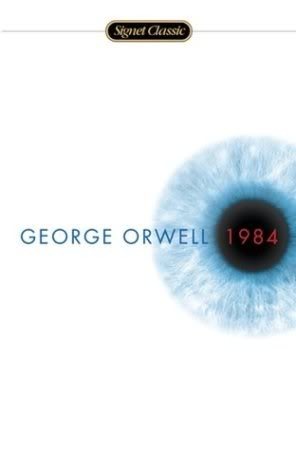
Book Review of 1984 by George Orwell

Goodreads Summary: The year 1984 has come and gone, but George Orwell's prophetic, nightmarish vision in 1949 of the world we were becoming is timelier than ever. 1984 is still the great modern classic of "negative utopia" -a startlingly original and haunting novel that creates an imaginary world that is completely convincing, from the first sentence to the last four words. No one can deny the novel's hold on the imaginations of whole generations, or the power of its admonitions -a power that seems to grow, not lessen, with the passage of time.
Goodreads Rating: 4.13 stars with over 1.9 million ratings
Genre Listing: Science Fiction, Dystopia, Literature, Fantasy, Philosophy, Politics, British Literature
Get the Book: Amazon, Book Depository
Book Challenge: #6 A Book that's considered a classic

Book Review:

I finished a classic! Woohoo! I feel like I should get some kind of award when I actually finish a classic. I don't know what it is, but I have a hard time reading them. 1984 by George Orwell was a bit of a rollercoaster for me. At times I found myself completely engaged in it and not able to put it down, but then there were a lot of occasions where I felt like it was painfully boring and I just wanted it to get on with the point. I really didn't find myself getting into it until around 40% and after that my interest in it was sporadic at best. 

Given that this book was produced in the late 40s early 50s, it's actually a bit terrifying. There were definite places that I could draw some connections to modern day. I can also see why this year purchases of it have skyrocketed, but I'm not going to dive any further into that subject. You all can infer what you want from it, and leave it at that.

I thought the idea of Winston's job was really interesting and how there are entire organizations to altering previously recorded information. The workers in the party just seem to go with it and update it as needed and no one but Winston seems to question it. I also found it interesting, and terrifying, that the entire culture was built on hate and fear. The world that Orwell created seems dark and awful, which I suppose is what Big Brother intended. 

The imagery created was something I really enjoyed. I thought that Orwell went into a surprising amount of detail about the devices used, the scenery, and just the every day to day life of an outer party member. The gadgetry almost seemed a little steampunk to me, but given that this would have been 30 years into the future for Orwell, I thought it was pretty incredible that he created it. 

I didn't really get the relationship with Julia, and I really disliked her. She seemed really vapid to me and like she just hated the party because it was something to do, and nothing to do with her actual thoughts. I honestly could have done without her in the story, but I suppose Winston's relationship with her is what progressed him into diving further into his own thoughts. 

The ending surprised me quite a bit. I was expecting something completely different, but I'm not disappointed in the actual ending. It fit really well with the darkness and bleakness of the story, and honestly, I think it made everything a bit more interesting.  The one thing that really threw me off was the chapters that were written from "the book." I felt like they were dreadfully boring, and honestly, I mostly skimmed them so I wouldn't fall asleep.

Overall, I enjoyed the book. I can see why it's a classic. It's not going to be my favorite book ever, but I'm glad I took the time to read such an important classic. I definitely think that it's the backbone and inspiration of a lot of dystopian books that are out today.


Saturday, January 14, 2017

Book Review of Queen by Right by Anne Easter Smith

Goodreads Summary:  From the award-winning author of A Rose for the Crown, Daughter of York, and The King's Grace comes another masterful historical novel—the story of Cecily of York, mother of two kings and the heroine of one of history's greatest love stories.

Anne Easter Smith's novels are beloved by readers for their ability "to grab you, sweep you along with the story, and make you fall in love with the characters." In Cecily Neville, duchess of York and ancestor of every English monarch to the present day, she has found her most engrossing character yet.

History remembers Cecily of York standing on the steps of the Market Cross at Ludlow, facing an attacking army while holding the hands of her two young sons. Queen by Right reveals how she came to step into her destiny, beginning with her marriage to Richard, duke of York, whom she meets when she is nine and he is thirteen. Raised together in her father's household, they become a true love match and together face personal tragedies, pivotal events of history, and deadly political intrigue. All of England knows that Richard has a clear claim to the throne, and when King Henry VI becomes unfit to rule, Cecily must put aside her hopes and fears and help her husband decide what is right for their family and their country. Queen by Right marks Anne Easter Smith's greatest achievement, a book that every fan of sweeping, exquisitely detailed historical fiction will devour.

Goodreads Rating: 4.0 with over 2,800 ratings
Genre Listing: Historical Fiction, Medieval, British Literature
Get the Book: Amazon, Book Depository
Book Haul Link: June 2016 Book Haul
2017 Book Challenge:  #16 a Historical Fiction

Book Review:

Hello, readers, I hope everyone had a fantastic New Years! I'm so glad I finally finished this book. I started it some time before Christmas, and just now got it done. I'll be honest; it's a bit of a slow read. Honestly, I wasn't all that impressed with Queen by Right by Anne Easter Smith. It's got some decent reviews, but it just didn't engage me like I had expected it too.

The timeline was hard for me to keep straight in this book. It starts in 1461 after Cecily is widowed and in mourning. It then flips between 1461 and her entire life once she met Richard. For me, it made it very hard to keep track of what was going on. Considering she met Richard when she was eight, that's a lot of time to cover. Once her children started getting introduced into the story, I had to frequently flip back to the family tree and list of characters to keep everyone straight. I think this took away from the story for me because I had to focus so hard on who was who. 

I felt like Cecily started off as an adamant character, and I felt like she had a lot of emotion. The older she got, I felt like she lost that spark that made me initially like her. I think her reputation of being "Proud Cis" made her seem emotionless and a little unlikable. She came across as a little uppity, which given her position, I guess that's expected. I just really didn't feel a great connection to her. She had her moments where she was likable, but for the most part, I didn't feel anything to her one way or another. 

I think what kept me most in this story is the timeline, and I wanted to see how it tied into other events. I've read a bit about the Plantagenet and Lancaster fighting, so it was interesting to get more perspective on it. Obviously, this is a work of fiction, but one thing I like about historical fictions is I can do some research and connect the fiction with what actually happened. 

I did appreciate Cecily and Richard's relationship. I think their relationship was probably rare for the time. They were able to group up together as children, fall in love and then get married. It was still arranged, but I think they would have gotten married regardless. I think they showed a lot of respect for each other, and it was interesting to see them grow as a couple. I felt like they also showed a lot of love for their children. Aside, from Anne's beginning years. It seems like they tried to make each child feel special, which I imagine would be hard to do with their massive brood. 

Overall, I liked the book, but it didn't wow me. I was more interested in the history than the story the characters were telling, and I think the lack of linear timeline made it hard to appreciate the story fully. On the grand scheme of things it's not on my list of favorite historical fiction books, but if you're a fictional history lover it's a decent read on a someone I think to be a lesser known historical figure.